Best hotel management software
Last updated: April 7, 2026
Hotels, aparthotels and serviced apartment portfolios operate across multiple booking channels, pricing tools and operational workflows. The challenge is not choosing software with the longest feature list. It is choosing a system that holds distribution, housekeeping, revenue and guest communication together without adding friction.
Modern hospitality operations require coordination. When availability, pricing and messaging live in separate tools, mistakes follow. The best hotel management software reduces that risk by centralising control, something often handled internally or with support from a hotel management company that connects technology with daily operations.
For many operators, software alone is not the full solution. Operational structure, revenue strategy and guest communication also play a role, which is why many portfolios choose to hire a hotel management company to coordinate systems, teams and distribution across multiple properties.
What hotel management software must deliver in practice
Effective hotel management software must synchronise distribution, operations, revenue and communication. If those systems are fragmented, performance becomes inconsistent.
At minimum, a hotel management system should address four operational realities:
- Multi-channel reservations
- Real-time availability and rate management
- Housekeeping and maintenance coordination
- Centralised guest communication
Without tight synchronisation, teams manually update calendars, chase rate discrepancies and manage messages across disconnected inboxes.
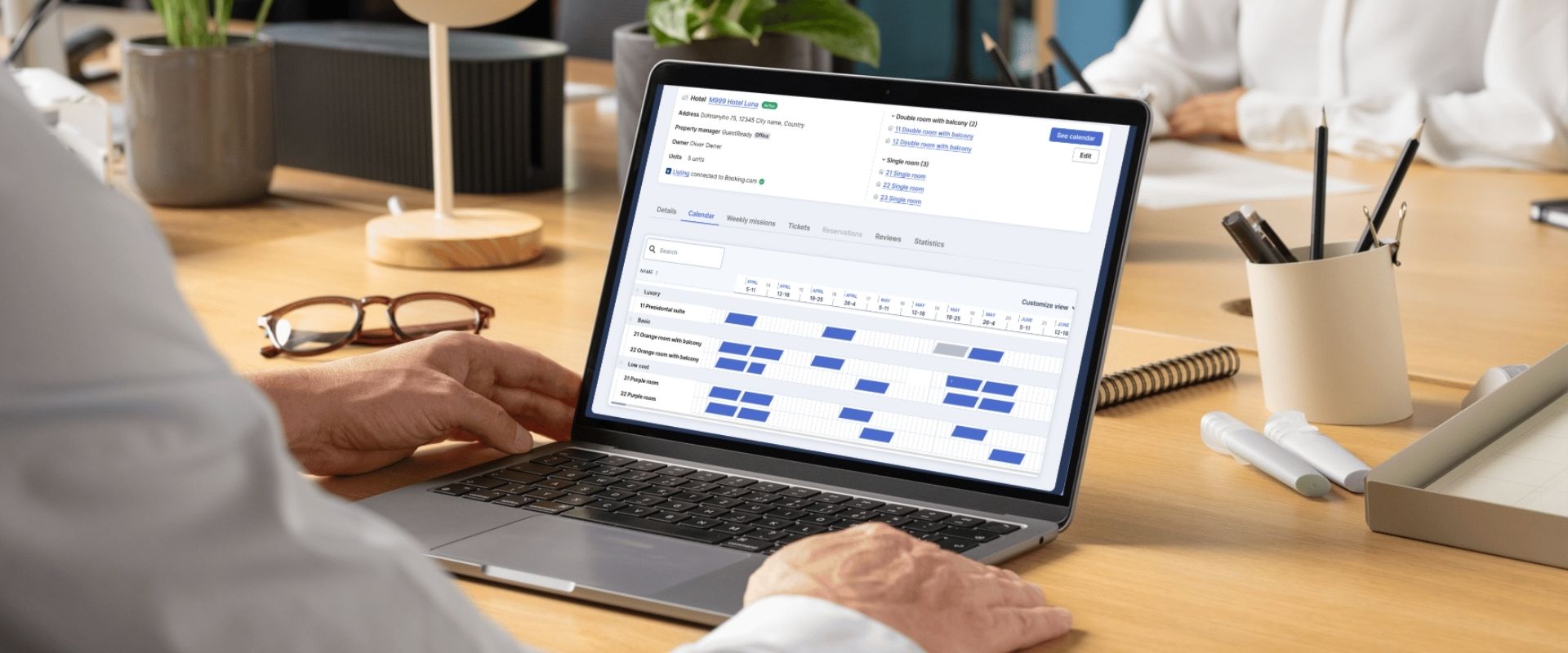
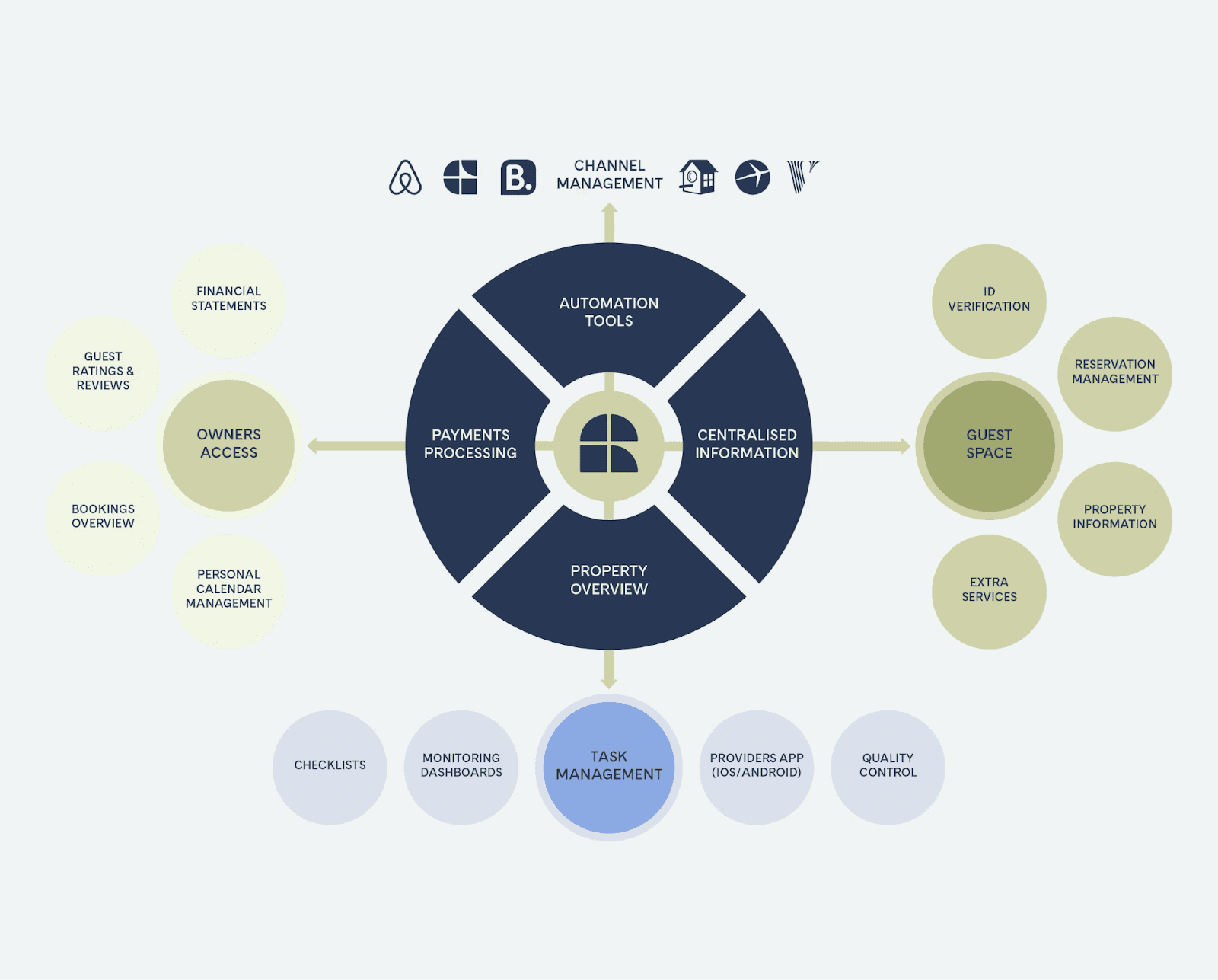
A structured platform such as RentalReady’s property management software brings these components into one environment. Distribution, operational workflows and performance monitoring are aligned rather than scattered.
Software should reduce complexity. If it increases manual effort, it is not fit for scale.
Why RentalReady fits hybrid hotel and aparthotel models
Boutique hotels and aparthotels need the flexibility of short-term rental platforms combined with the operational structure of traditional PMS systems. RentalReady is built for that balance. Many legacy hotel PMS systems assume fixed inventory and predictable booking patterns. Short-term rental tools often lack the operational control required for multi-unit hospitality businesses. RentalReady is positioned between those models. It supports:
- Boutique hotels
- Aparthotels
- Serviced apartment operators
- Multi-location hospitality brands
Its architecture allows operators to manage short stays, extended bookings and multi-channel distribution within one structured workflow. For an overview of how the system supports hybrid hospitality, see RentalReady’s platform overview for hotels and aparthotels.
Core systems that drive hotel performance
Hotel management software must control distribution, communication, operational tasks and pricing in an integrated way. The value lies in how these systems work together.
Multi-channel distribution and availability control
Overbookings and rate inconsistencies damage both revenue and reputation. RentalReady’s multi-channel distribution and channel manager synchronises availability and pricing across Airbnb, Booking.com and other platforms in real time. When availability is managed centrally, operational risk decreases.
Centralised guest communication across booking platforms
Guest communication is often fragmented across email, Airbnb messaging and other channels. RentalReady’s unified guest communication inbox for hospitality teams consolidates conversations in one interface, helping teams respond quickly and consistently. Speed and clarity of communication directly influence guest satisfaction.
Housekeeping and maintenance task management
Turnover coordination is one of the most operationally sensitive areas of hospitality. RentalReady’s housekeeping and maintenance task management system allows managers to assign cleaning, inspections and repairs with clear accountability and status tracking. Task workflows reduce last-minute issues and service failures.
Automated guest messaging and operational workflows
Manual processes limit scalability. RentalReady’s automation tools for guest messaging and booking workflows trigger confirmations, pre-arrival instructions and operational actions based on booking events. Automation ensures consistency without increasing administrative workload.
Revenue management and pricing strategy tools
Occupancy alone does not define performance. RentalReady’s revenue management and pricing optimisation features support rule-based pricing strategies designed to protect margins while responding to demand patterns. Pricing decisions become structured rather than reactive.
Integrations that reduce operational friction
Good hotel management software should not exist in isolation. Integrations determine how smoothly your existing tools connect to daily operations. Hospitality operations rarely rely on a single platform. Payments, smart locks, dynamic pricing tools, noise monitoring, and ID verification systems all form part of the ecosystem.
RentalReady’s hospitality software integrations connect with key operational tools, allowing data to flow between systems rather than requiring manual duplication.
This includes integrations with:
- Dynamic pricing tools
- Payment gateways and financial processors
- Smart access and lock management systems
- Guest verification services
- Communication channels such as SMS and messaging platforms
Strong integrations reduce operational blind spots. Weak integrations create parallel systems that staff must constantly reconcile.
Implementation and onboarding: where many systems fail
Even the strongest software fails without structured onboarding. Migration, training and system configuration determine whether performance improves or stalls. Switching hotel management software is rarely just a technical change. It involves migrating listings, rates, reservations, workflows and team habits.
RentalReady provides structured onboarding to ensure that:
- Channel connections are configured correctly
- Rate logic is aligned with business strategy
- Automation rules reflect operational realities
- Teams understand how to use dashboards and reporting tools
The goal is not simply installation. It is operational alignment from the start.
Understanding implementation timelines and onboarding scope is as important as comparing feature lists.
Pricing transparency and operational value
Software cost should be evaluated against operational savings and revenue protections. Hotel management software pricing often varies based on portfolio size, feature set and onboarding requirements. What matters is whether the platform reduces administrative workload, prevents overbookings, and supports pricing discipline.
RentalReady outlines its structure through transparent hospitality software pricing plans, allowing operators to assess which tier matches their operational complexity.
Cost should be measured against:
- Time saved on manual updates
- Reduction in booking errors
- Improved response speed
- Stronger pricing control
Software that stabilises operations frequently pays for itself through efficiency gains alone.
Who RentalReady is best suited for
Not every operator needs enterprise software. RentalReady is designed for hospitality businesses managing multiple units and multiple channels. The platform is particularly suited to:
- Boutique hotels seeking OTA integration without losing operational control
- Aparthotels balancing short and extended stays
- Serviced apartment portfolios operating across cities
- Hospitality groups scaling across markets
Smaller operators may manage with simpler tools. Multi-unit portfolios, however, require structured oversight that reduces operational fragmentation.
Choosing hotel management software with operational clarity
The best hotel management software is defined by operational stability, not feature volume. When evaluating hotel management systems, focus on:
- Real-time distribution control
- Centralised communication
- Structured task management
- Automation that reduces manual effort
- Revenue tools that protect margins
- Integration depth
- Implementation support
RentalReady combines these elements into a platform designed for hybrid hospitality businesses that require both flexibility and control.
For a closer look at how the system fits your portfolio, request a demonstration via RentalReady’s hotel management software platform.
When hotel management software is not enough
Some operators require both technology and operational management. Software supports performance; structured management sustains it.
Even the most comprehensive hotel management software requires disciplined execution. Pricing strategies must be reviewed, guest communication must remain consistent, and cleaning workflows must be enforced.
For operators who prefer to combine software infrastructure with hands-on operational expertise, GuestReady’s hotel management services provide full operational support alongside technology. Technology provides structure. Management ensures execution.
FAQ
What is hotel management software used for?
Hotel management software centralises reservations, availability, pricing, guest communication, housekeeping coordination, and reporting into one system. It replaces disconnected tools and reduces operational risk across booking channels.
How is hotel management software different from traditional PMS?
Traditional PMS platforms are often built for fixed-room hotels with predictable booking patterns. Modern hotel management software for hybrid models supports multi-channel distribution, flexible stay lengths, automation workflows, and integration with short-term rental platforms.
Can hotel management software prevent double bookings?
Yes. Real-time channel management synchronises availability and pricing across OTAs such as Airbnb and Booking.com. When properly configured, this significantly reduces overbooking risk.
Is hotel management software suitable for aparthotels and serviced apartments?
Yes. Hybrid hospitality models require flexibility for short stays, extended bookings, and multi-platform distribution. Software built for this structure supports both operational control and booking flexibility.
How long does it take to implement hotel management software?
Implementation timelines depend on portfolio size and configuration needs. Migration typically involves channel connections, rate setup, automation configuration, and staff onboarding. Structured onboarding reduces disruption during transition.
What integrations should hotel management software include?
Key integrations often include dynamic pricing tools, payment gateways, smart locks, guest verification services, accounting systems, and communication platforms. Integration depth determines operational efficiency.
Is hotel management software enough to improve performance?
Software provides structure and automation, but performance also depends on execution. Pricing strategy, guest communication standards, and operational discipline remain essential.
