
12+ of the best Airbnb listing descriptions: Examples, structure and best practices for 2026 + template
Last updated: June 10, 2026
If you have already spent good money on professional photography, your Airbnb listing description deserves the same attention. It is the only space on your page where you choose every word, set the tone, and make the case for why a guest should book your property over the next one in the search results.
The hard truth in 2026 is that descriptions matter more than they used to, not less. The platform now reads guest reviews with natural-language processing, surfaces only a few hundred characters of your description on mobile, and rewards listings whose copy lines up with what real guests later say in their reviews. A vague, generic description does not just under-sell your property. It quietly drags down everything the algorithm sees afterwards.
We will walk you through what an Airbnb description actually is in 2026, how to structure it, how to write each of its four official sections, and 12 live and classic examples we admire. At the end, there is a short FAQ, a note on AI generators, and a quick word on how our team writes descriptions for owners who would rather hand it off.
Estimate your property’s potential
Are you curious about how much your primary residence could earn if you turned it into an Airbnb? Use our estimate tool to quickly assess your property’s earning potential.
Key Takeaways
- Airbnb descriptions matter more in 2026 because mobile previews are short, guests scan quickly, and listing copy can influence how guests describe the stay in reviews.
- The strongest listings lead with a specific differentiator, use all four Airbnb description fields, and replace vague words like “stunning” with concrete details guests can see or experience.
- Descriptions should be written for a clear guest type, while honestly flagging quirks such as stairs, noise, parking, or shared access.
What changed in 2026 and why your listing needs an update
A lot has changed, and some of the best practices on how to write Airbnb descriptions are outdated. Let’s check out what went on below.
Guest Favourites made trust signals more important
First, the platform launched Guest Favourites on 8 November 2023 as part of its Winter Release. The badge is now awarded to the top 10 % of eligible homes based on ratings, reviews and reliability, and Airbnb’s own newsroom describes Guest Favourites as “a collection of the 2 million most-loved homes on Airbnb based on ratings, reviews, and reliability.”
It has become the most visible quality signal in search, in many cases more eye-catching than the Superhost crown.
Review-friendly wording now matters more than generic copy
Second, Airbnb now uses natural-language processing to parse the language of guest reviews. That means the words you choose in your description tend to come back to you in reviews, and those review words feed straight back into search relevance.
If you write “fast Wi-Fi for remote work” into your description and prove it on arrival, guests parrot the same phrase in their five-star review, and that phrase strengthens your ranking for remote-work queries.
Generic adjectives like “amazing” or “stunning” cannot do that work.
New listings can no longer rely as heavily on early visibility
Third, the New Listing Boost has been quietly halved. An independent 2025 analysis by Homesberg, looking at 85,000 first-page searches over 189 days between 21 April and 27 October 2025, found the share of new listings reaching page one dropped from around 6.6 % to 3.3 %.
The company concluded that “Airbnb has quietly halved the new listing boost without any official announcement.”
For new hosts, this means the description has to do far more lifting from day one to land that first booking.
Add to that the 15.5 % host-only fee that came into force on 1 December 2025, and the case for sweating every word of your listing is stronger than ever.
The four sections of an Airbnb listing description (and how to use each)
Airbnb’s listing editor splits the description into four fields. Most hosts only really use the first one, which is exactly why filling out all four is one of the quickest wins available.
Description summary
This is the paragraph that appears at the top of your listing page and on every search card. Airbnb capped it at 500 characters in July 2022, and on the mobile app, only around the first 295 characters are visible before guests have to tap “Show more”.
Treat the summary as a headline, not a description. Lead with your single strongest differentiator, place a sensory or location-specific detail in the first sentence, and name the target guest. Save the room-by-room inventory for the next section.
The space
This is where you describe the property itself. Walk a reader through it the way you would walk a friend through it: the layout, the standout features, the things you are quietly proud of. Mention specific items rather than generic categories. “Vintage Ercol dining table” reads warmer than “dining furniture,” and “Nespresso machine and a stovetop espresso pot for purists” reads more thoughtfully than “coffee facilities.”
Guest access
What can your guests use, and what is off-limits? Cover parking, the garden, the roof terrace, the laundry, any shared corridors, and whether the entire property is theirs or only part of it. This is also the right place to flag anything practical they will want to know before they book, such as the number of flights of stairs or whether there is a lift.
Other things to note (and Neighbourhood / Getting around)
Use the Other things to note field to be honest about quirks, fees, house rules and anything that has surfaced in past pre-arrival messages. Use Neighbourhood and Getting around to do for the location what The Space did for the property: name specific cafés, walking distances, the nearest Tube or train station, the supermarket, and the nicest morning view.
Airbnb’s own Resource Centre puts it plainly: “Use the Listing description section to describe what’s unique about yours. Keep it brief. Guests often scan listing descriptions for key features.
How to write an Airbnb description in six steps
Ready to write a description for your rental property? Start with these essential rules. And don’t worry, below you will find a lot of examples that will inspire you.
- Define your target guest in one sentence. Couples on a romantic break, families with young children, business travellers in town for a conference, dog-owners walking the South West Coast Path. A description trying to please everyone will please no one in particular.
- Open with your strongest, specific differentiator. Not “Beautiful one-bedroom flat,” but “First-floor warehouse loft with double doors opening directly onto Hoxton Square.” Specifics outperform adjectives every time.
- Tell a short story, then list the proof points. A single sentence of atmosphere, followed by concrete features. “Wake up to bells from the 14th-century church across the square, then walk three minutes to the bakery for warm pastéis de nata.”
- Mirror the language guests search and filter for. If guests in your area filter for “near Tube,” “pet-friendly,” “fast Wi-Fi,” “EV charger”, or “walk to beach,” use those exact phrases naturally in the text. The algorithm picks up the alignment between your description and how guests search, which is one of the strongest signals in Airbnb listing optimisation.
- Address potential concerns upfront. Steep stairs, a tricky entry, no parking, a train line nearby. Reframing a downside as a known feature (“two flights of stairs lead up to the loft bedroom, where you’ll find the best view in the flat”) respects the guest and prevents the four-star reviews you would otherwise get.
- Close with a soft call-to-action. A simple “Send us a message if you’d like recommendations for the area or have a question about dates” reads warmer than ending mid-feature-list.
7 of our favourite Airbnb listing descriptions right now (as of May 2026)
It’s very hard to capture attention the right way. However, these 7 locations managed to do it, and honestly, these listings are the best ones we’ve seen up to May.
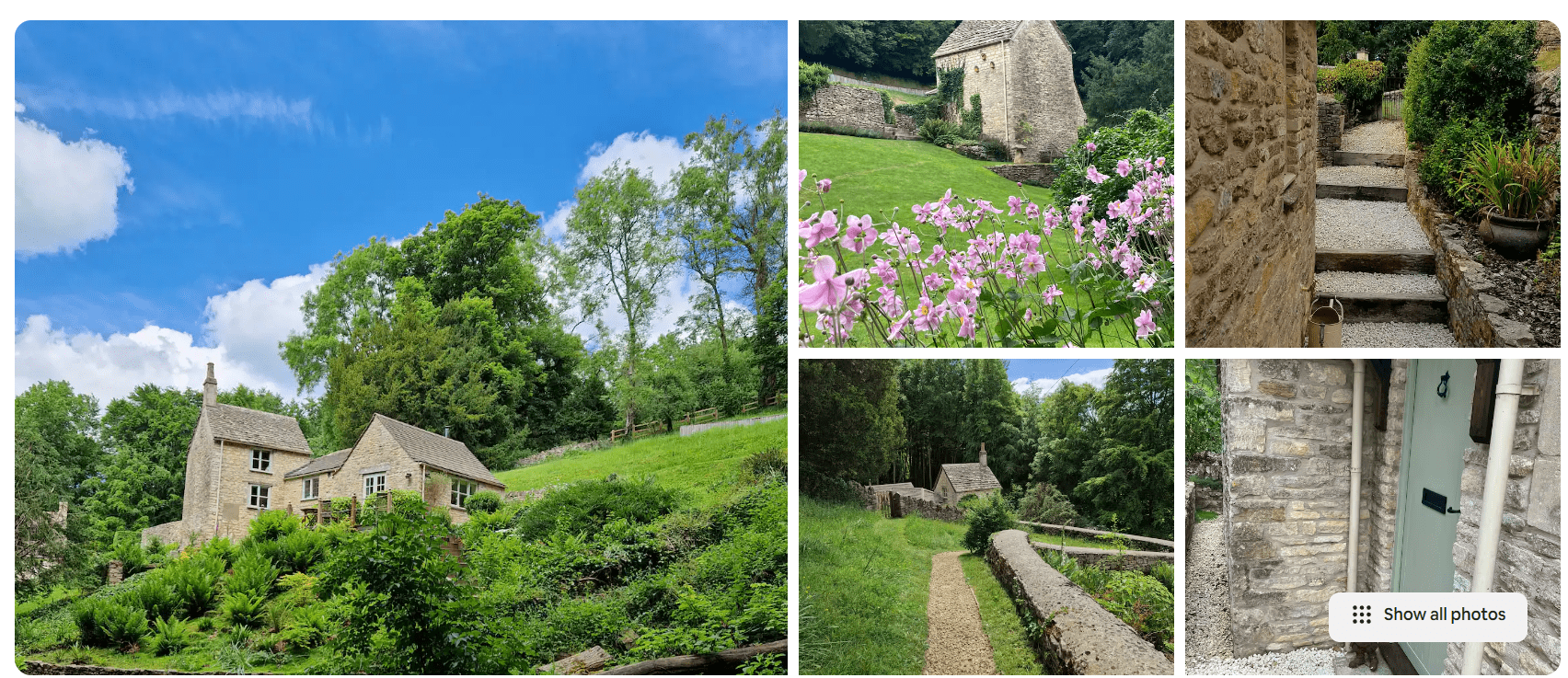
1. Badgers Bothy, Cotswolds, England
“Badgers Bothy is set within a woodland glade in the grounds of the 16th century Amberley Farmhouse and provides the most unique and charming country escape.”
The opening sentence anchors the property in a specific, named geographic feature (the 16th-century farmhouse, Minchinhampton Common, the AONB designation) and uses sensory cues that do the work of three adjectives. The reader knows exactly where they are, what era of building they are entering, and what the surroundings feel like, all inside one sentence.
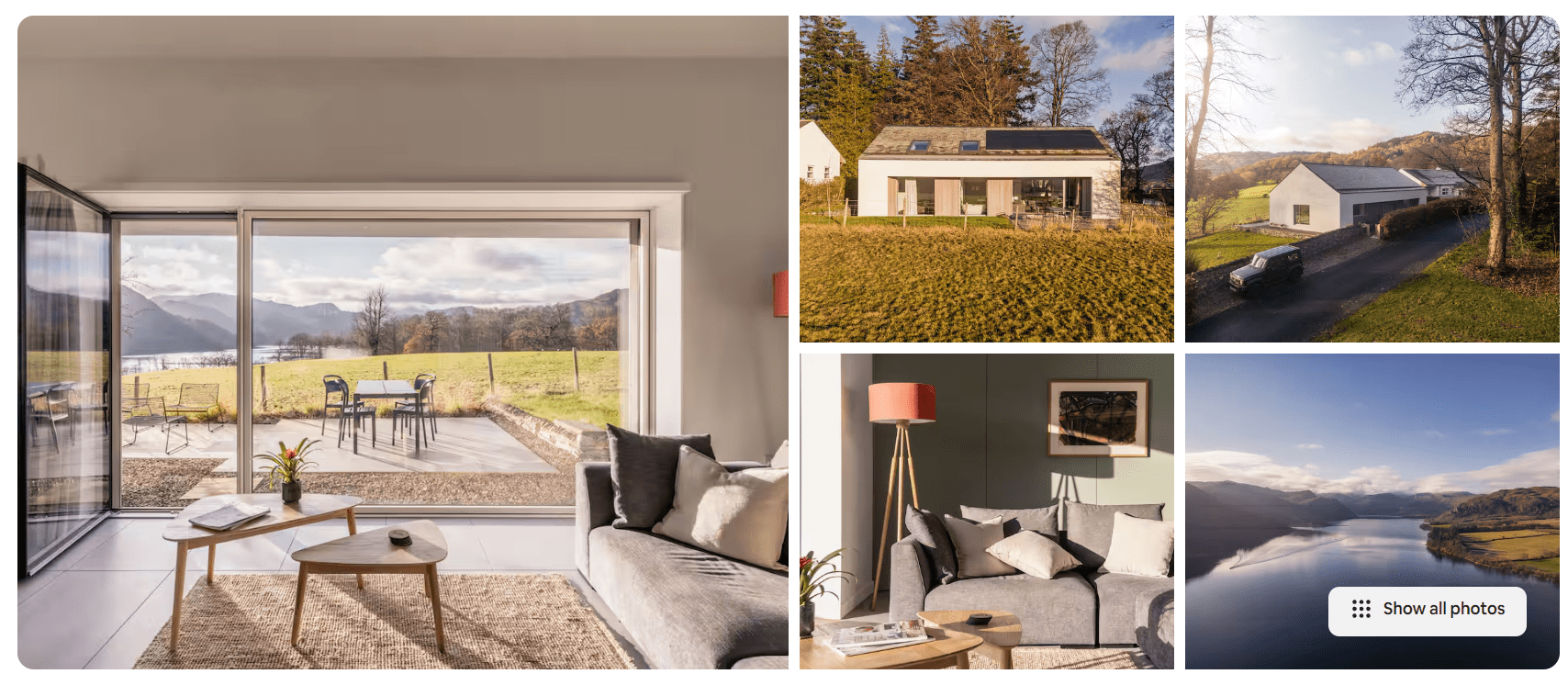
2. Tethera, Ullswater, Lake District
“Welcome to Tethera, an eco-luxury Passivhaus in serene Ullswater. Created by architects Anna and Russel Hayden, it blends sustainability with comfort.”
Naming the architects establishes credibility instantly, and the technical term “Passivhaus” signals serious sustainability without lecturing. The writing is aspirational, but every flourish is backed by a verifiable proof point. This is also a Top Guest Favourite, the highest tier of the new badge.
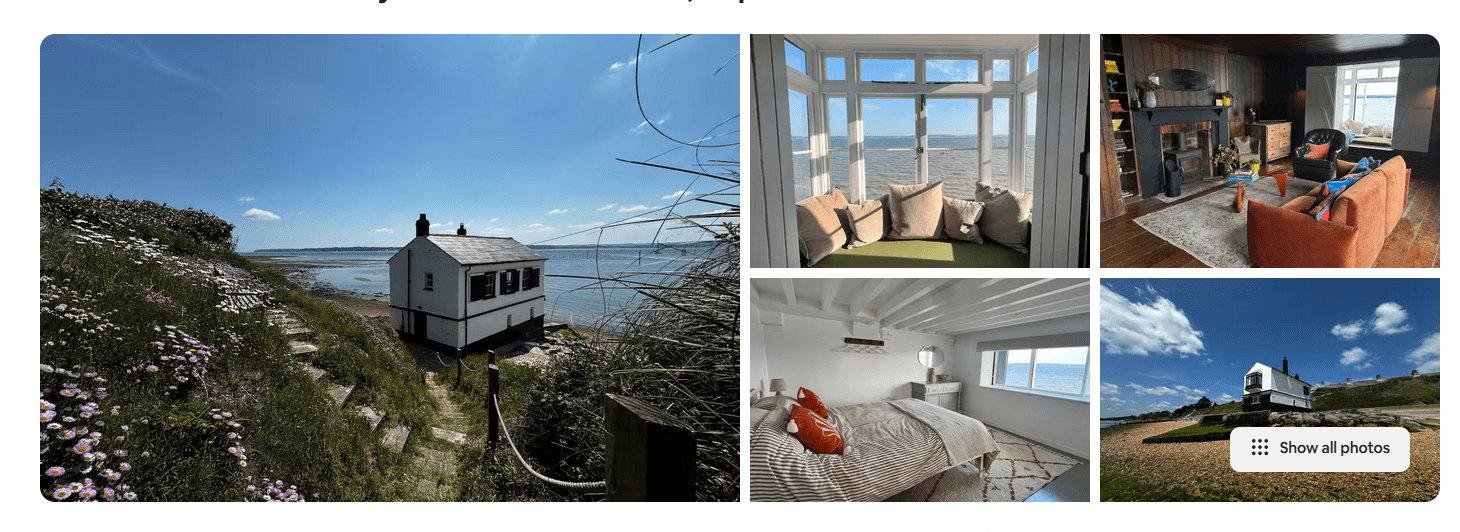
3. The Watch House, Lepe Beach, Hampshire
“A standout seafront landmark on Lepe Beach, The Watch House is a lovingly restored former lifeboat and coastguard station, once used to combat smuggling across the Solent.”
This is one of the cleanest examples we have seen of weaving guest-review quotes directly into the description. The host has folded in phrases like “an iconic beachfront stay” and “perfect relaxing getaway” as direct quotes from guests. It is a small move that demonstrates social proof inside the description itself, and it sets up the same vocabulary for future reviews to echo.
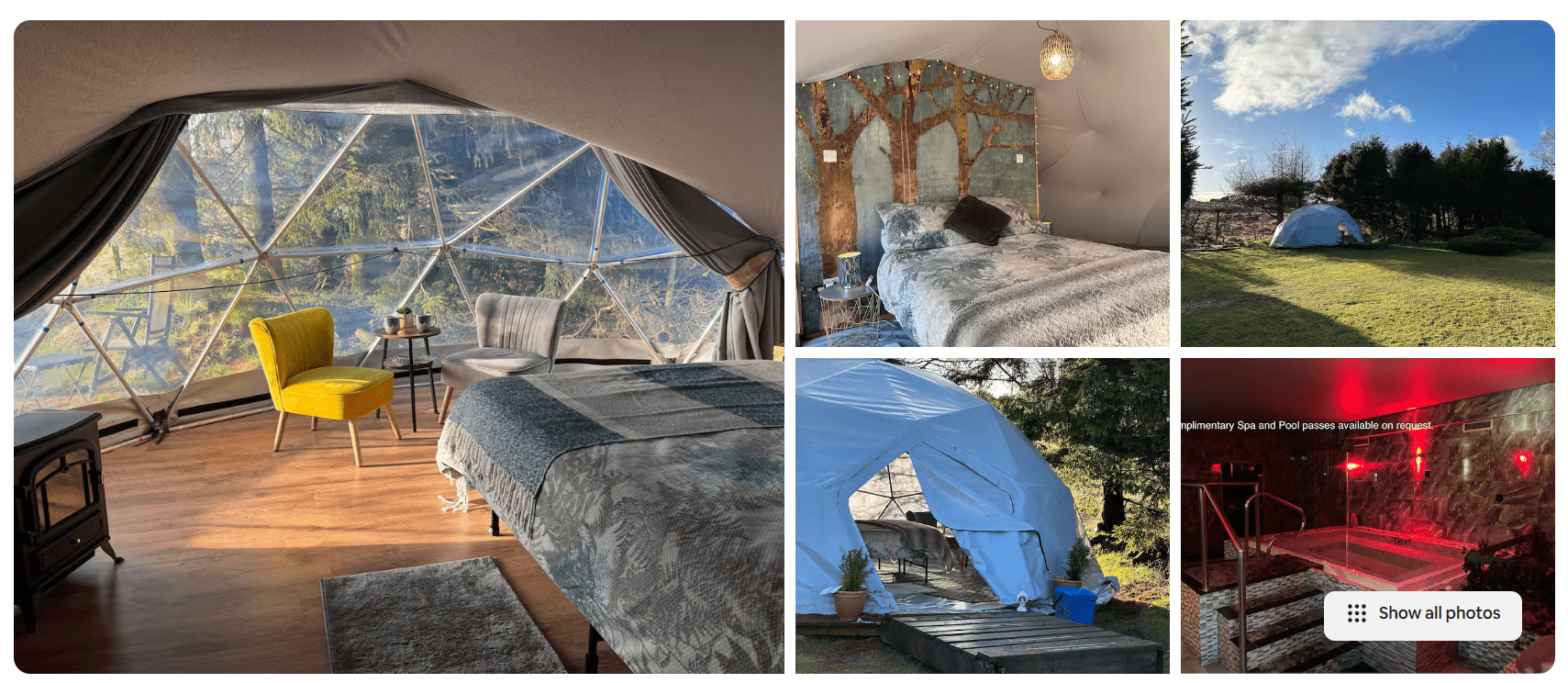
4. The GeoDome, Lake District
“Unusual 6m geodesic dome, Lake District. Great fun romantic stay in a secluded large garden with a private outside area to open empty fields.”
For any “unique stay,” the form factor is the headline. This host puts “6m geodesic dome” up front, then immediately names the audience (“romantic stay”). With more than 700 five-star reviews, the description tone is allowed to be matter-of-fact because the social proof underneath is doing the persuasion.
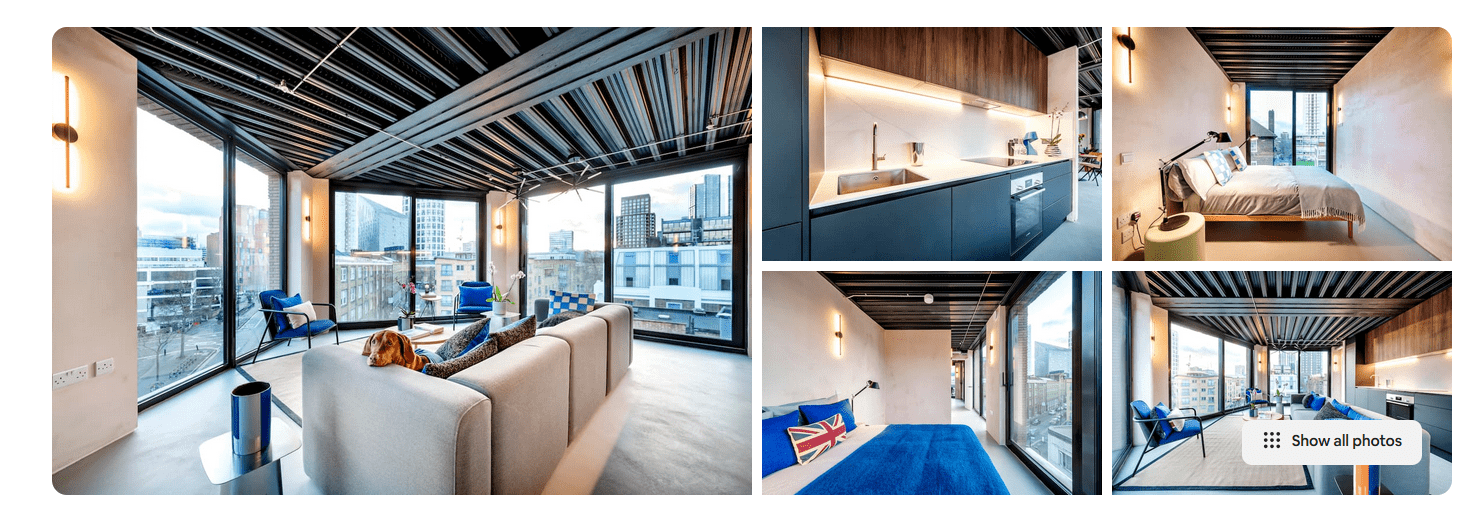
5. Stylish Shoreditch Loft overlooking Hoxton Square, London
“This sleek and contemporary loft apt offers captivating views of the city skyline. The expansive open-plan living area is illuminated by natural light streaming through floor-to-ceiling windows and showcases a chic, minimal, industrial-inspired aesthetic. Perfect for those seeking a distinctive living experience close to one of London’s most dynamic neighbourhoods, while enjoying the calm and sanctuary of this remarkable apartment.”
“City skyline views through floor-to-ceiling windows” does the heavy lifting here, setting the mood without over-explaining it. The description leans into atmosphere: sleek, minimal, industrial-inspired, and filled with natural light. It positions the apartment well for guests who want the energy of a dynamic London neighbourhood nearby, but still value calm, privacy, and a polished place to retreat to.
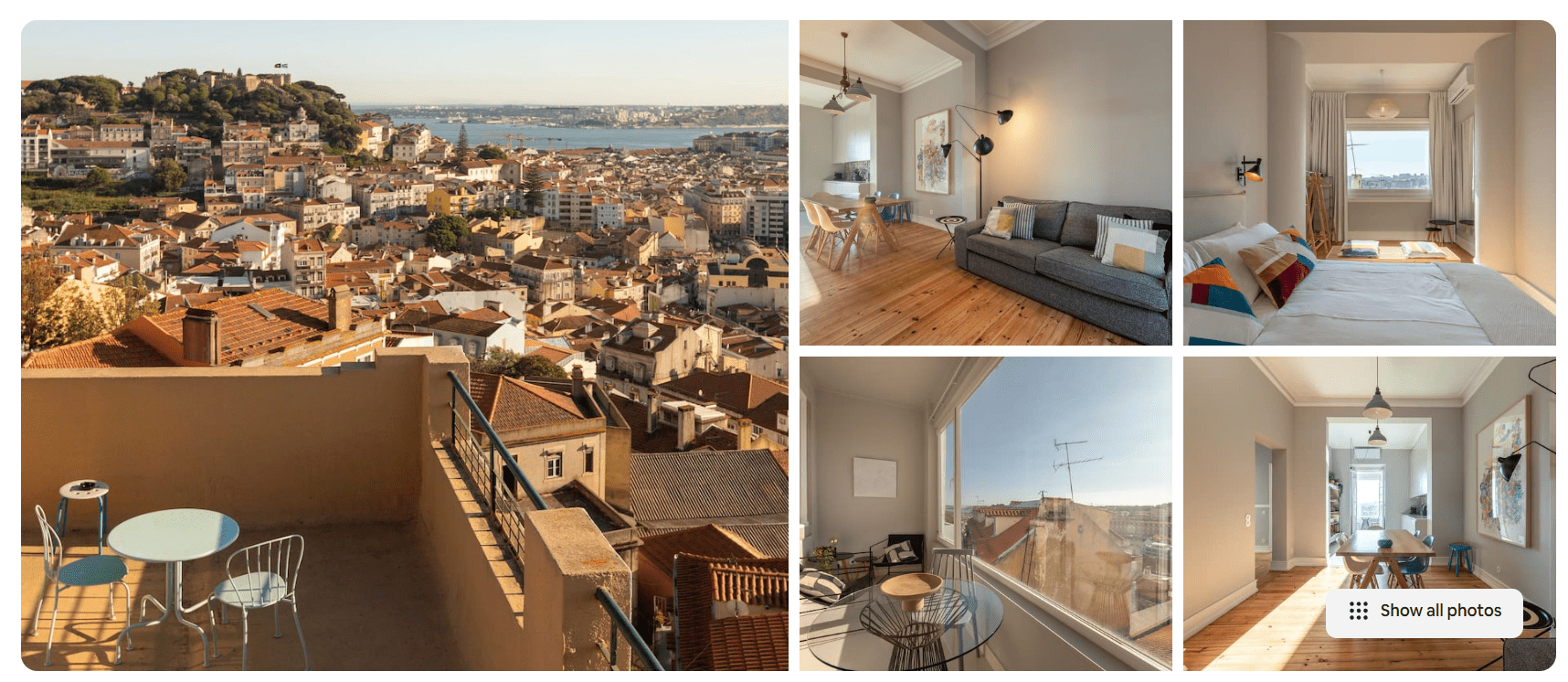
6. Magnificent Lisbon View Design, Lisbon
“Rated one of ‘The Most Romantic Airbnbs in Europe’ by Condé Nast Traveller and one of ‘The Best Airbnbs in Lisbon’ by The Times and Time Out magazine. The best view (almost 360º) in Lisbon from the coolest flat in a great location! The perfect nest for couples or lone writers!”
This is a masterclass in legitimate, high-impact social proof. Most UK hosts underuse third-party press, even when they have it. This description names three credible publications, gives a specific feature (“almost 360º view”), and ends by stating exactly who the flat is for. Three sentences, three jobs done.
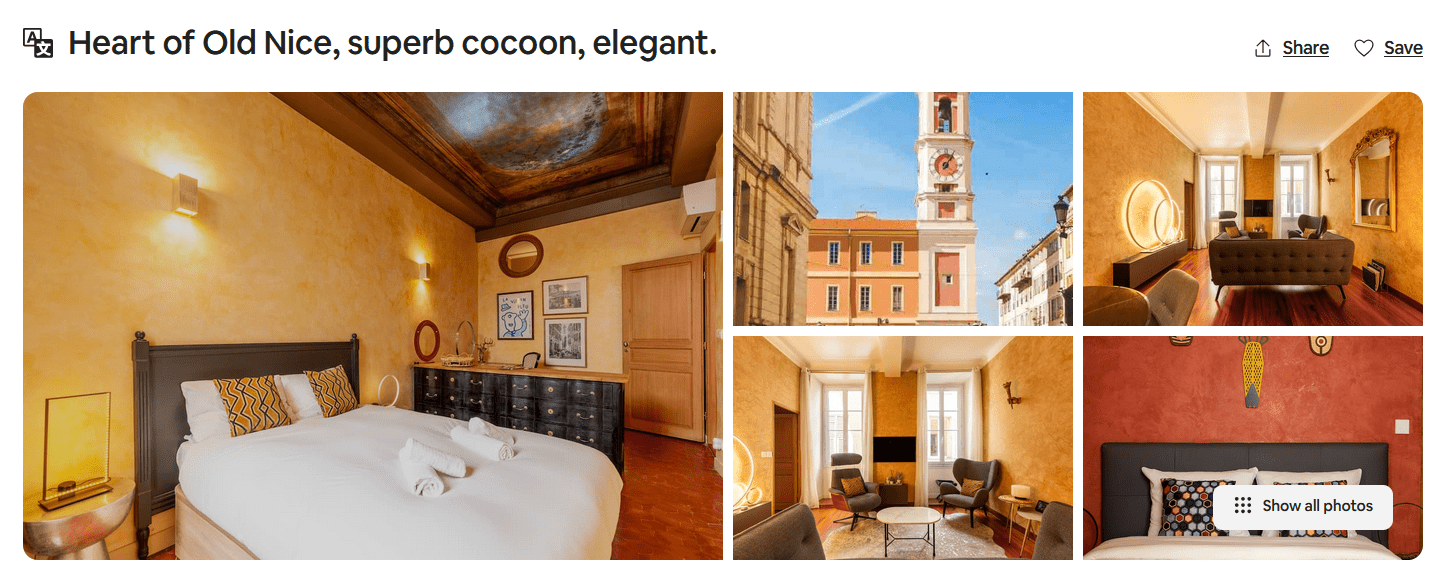
7. Heart of Old Nice, Côte d’Azur, France
“Heart of Old Nice, superb cocoon, elegant. Let yourself be seduced by this sumptuous two-bedroom, two-bathroom apartment in the Vieux Nice district. Sublime period fresco on the ceiling and designer furniture give this gem an exceptional atmosphere.”
A Riviera tone of voice that earns its flowery language by anchoring each adjective to a concrete proof point. The fresco on the ceiling and the designer furniture are verifiable in the photos. Emotive writing only works when the specifics under it hold up.
Classic descriptions that never go out of style
These five Airbnb rentals have been favourites of ours over several editions of this guide. Several were originally featured as Airbnb Plus homes before that programme wound down in November 2023, and the listings themselves remain live in 2026 (verified May 2026). Read them for technique, then click through and study the writing in its current Airbnb context.
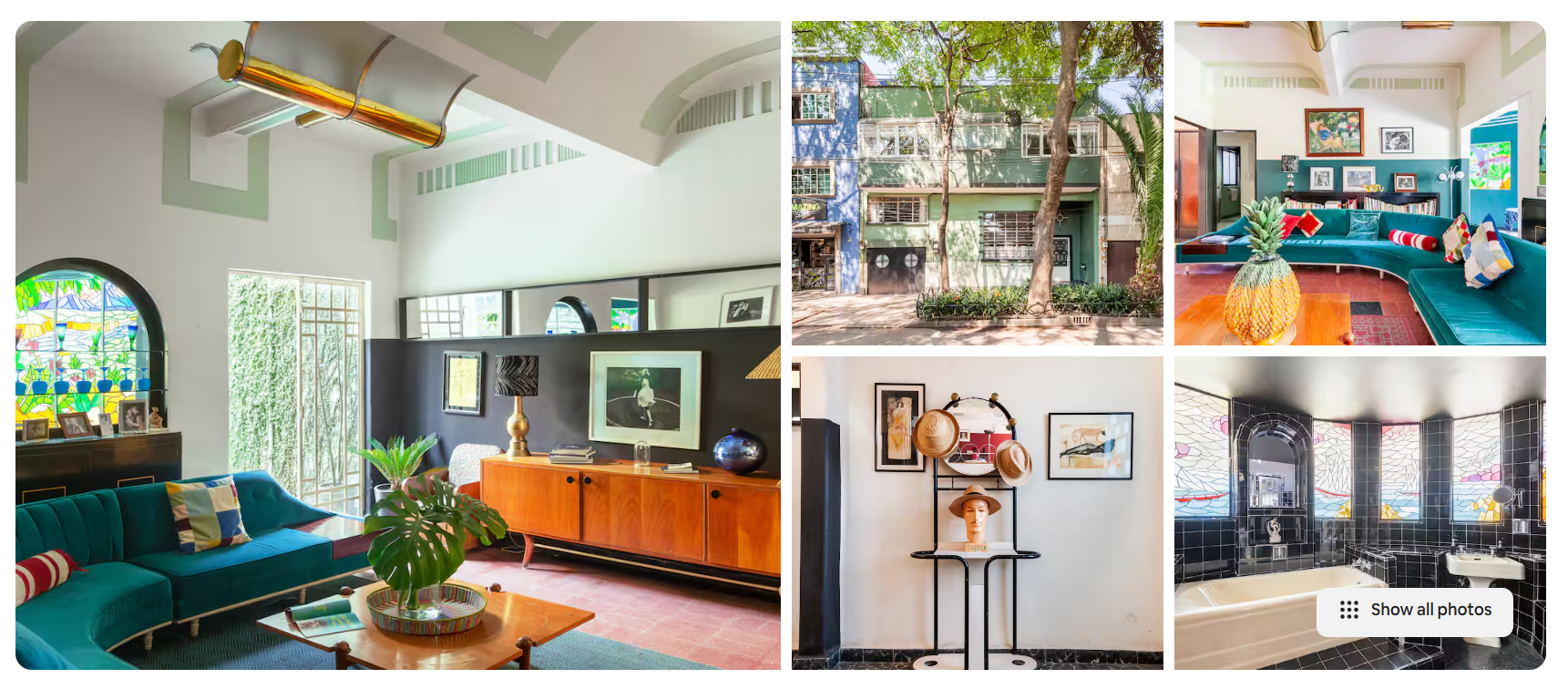
8. Elegant Art Deco Home with Garden, Condesa, Mexico City
“Enjoy the elegance of a bygone era while staying in this Art Deco home. Beautifully decorated and featuring a sweeping staircase, original stained-glass windows, period furniture, and a stunningly unique black-and-white tiled bathroom.”
This description creates a mood from sentence one and proves it with specific architectural features. The sweeping staircase, the stained-glass windows and the tiled bathroom are not generic adjectives; they are verifiable details. The reader is invited to imagine themselves in the space rather than to inventory it.
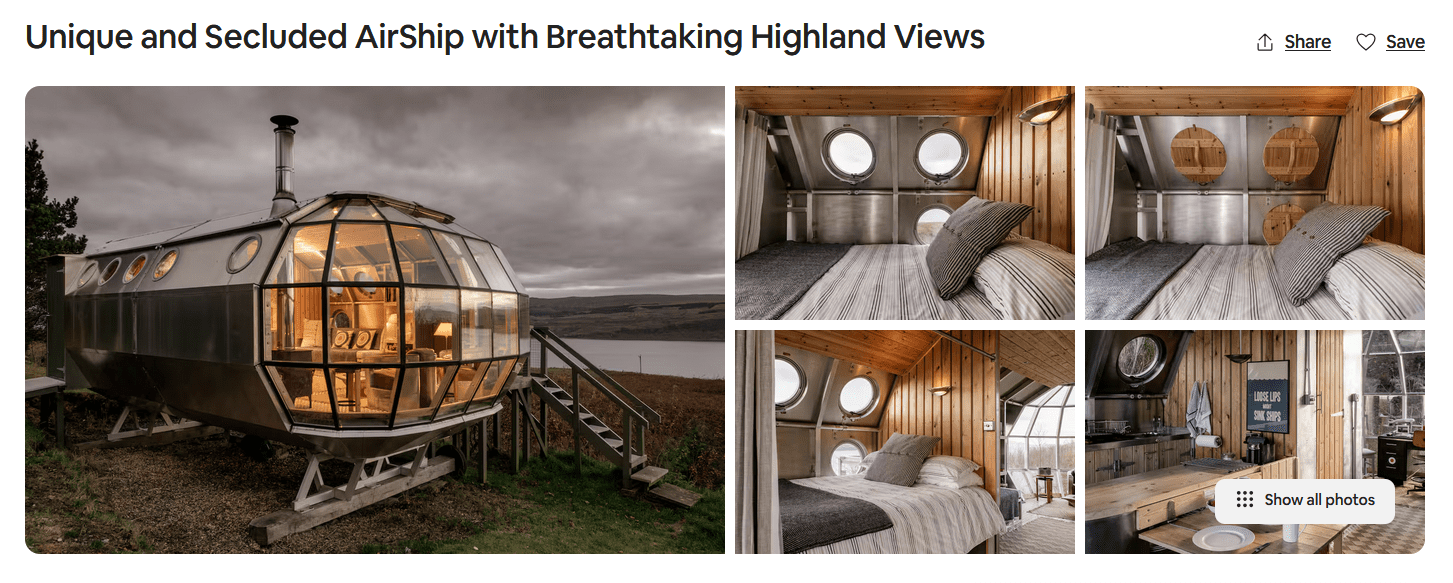
9. Unique and Secluded AirShip with Breathtaking Highland Views, Scotland
“Retreat to the deck of this sustainable getaway and gaze at the twinkling constellations under a cosy tartan blanket. AirShip 2 is an iconic, insulated aluminium pod designed by Roderick James with views of the Sound of Mull from dragonfly windows.”
This host knows exactly who they are talking to. Eco-aware, nature-loving travellers are addressed in the first phrase, and naming the designer (Roderick James) instantly establishes credibility. The honest line that follows, “comfortable, quirky and cool. It does not pretend to be a five-star hotel,” manages expectations gracefully.
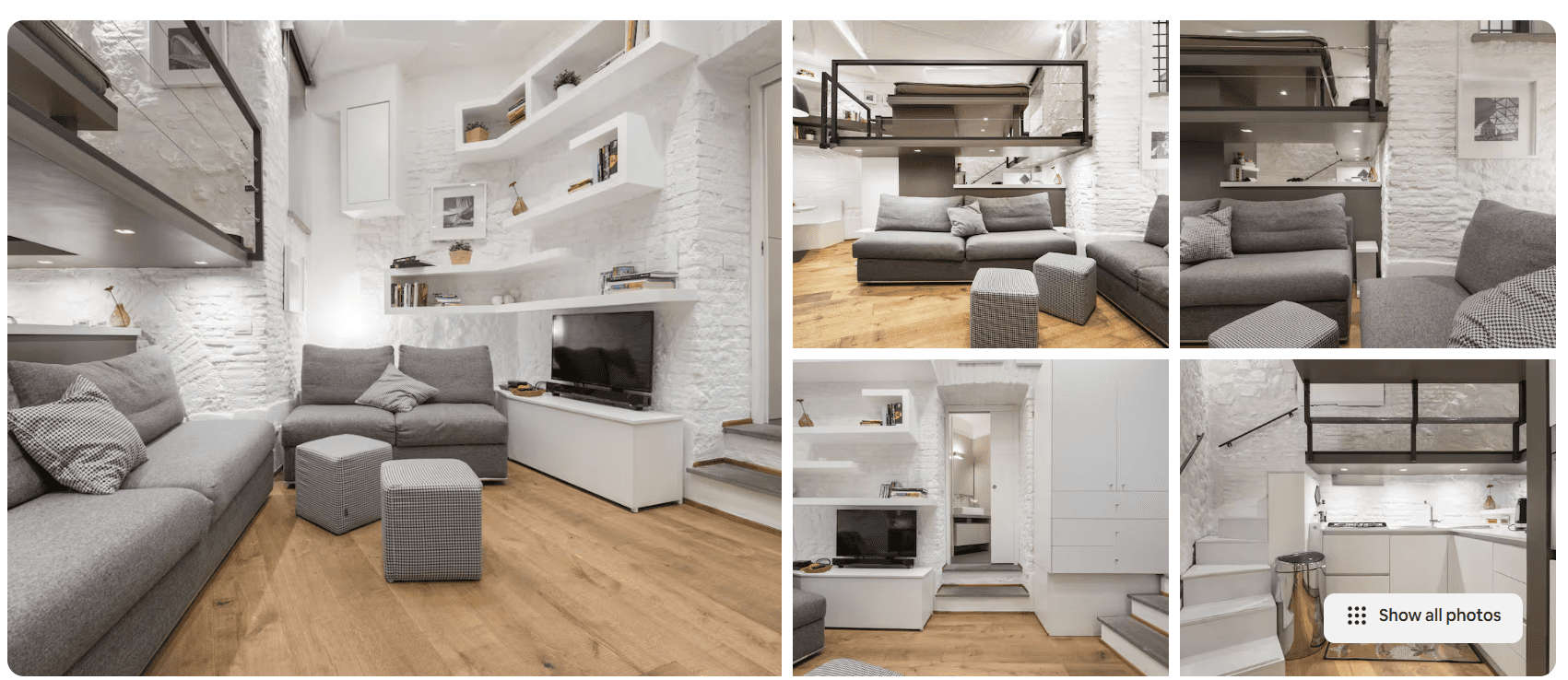
10. Luxury City Centre Loft on a Traffic-Free Street, Rome
“Take an early morning stroll and enjoy the Trevi Fountain without the tourists. Wander around the historic streets while the city sleeps, then head back for a morning coffee at this urban-chic studio with a suspended loft bedroom.”
This description leads with a moment rather than a feature. “The Trevi Fountain without the tourists” is the kind of differentiator most Rome listings miss because they all compete on the same convenience claims. By the second sentence, you already know exactly what is different about this flat. (Top Guest Favourite in Monti, 4.96 average over 444 reviews as of May 2026.)
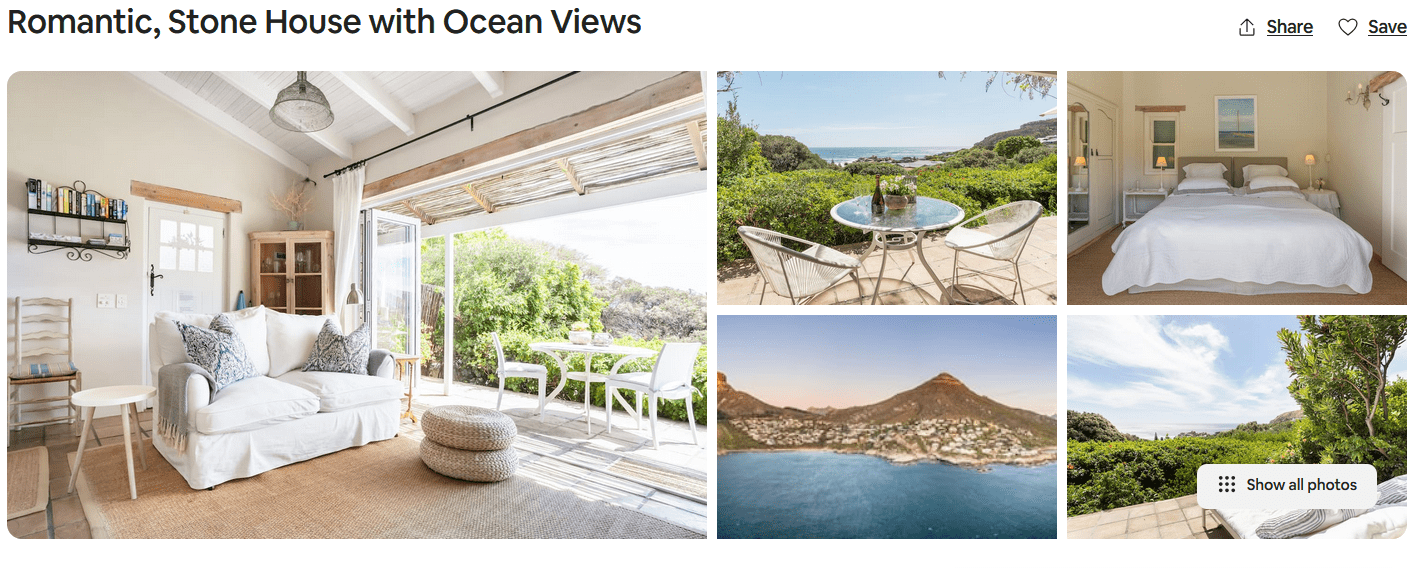
11. Romantic Stone House with Ocean Views, Llandudno Beach, South Africa
“Unwind at this stunning French Provencal beachside cottage. The house was lovingly built with stone floors, high-beamed ceilings, and antique details for a luxurious yet charming feel. Enjoy the sea and mountain views from the pool and lush garden.”
This pairs interior and exterior in a single rhythm and turns a quirk into a selling point with the phrase “Llandudno Beach, a locals-only spot with unspoilt, fine white sand.” Most hosts would have hidden a small, off-grid beach. This one made it the headline.
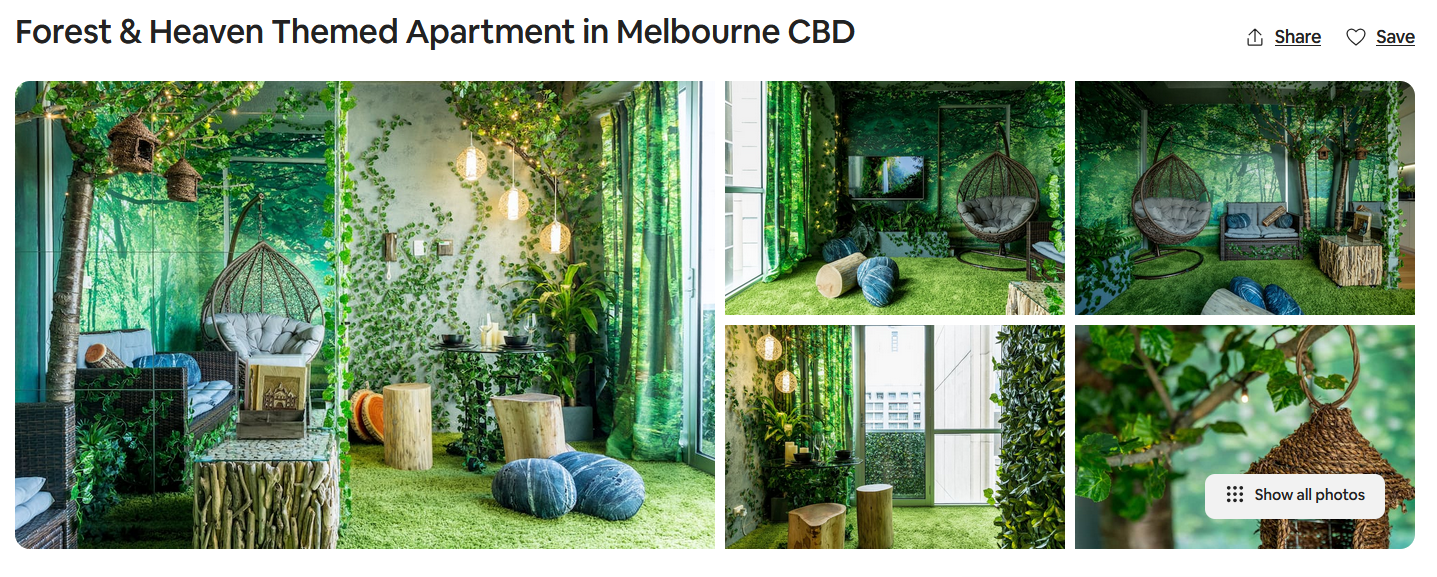
12. Forest-and-Heaven Themed Apartment, Melbourne CBD
“Pretend you are lost in a magical forest as you perch on a log or curl up in the swinging chair. Soak in the tub, then fall asleep in a heavenly bedroom with cloud-painted walls and twinkling lights. And when you wake up, the espresso machine awaits.”
Most CBD apartments compete on location and floor plan. This one competes on imagination. The fairy-tale language only works because every line of it is anchored in something concrete: the log, the swinging chair, the tub, the cloud-painted walls, the espresso machine.
How descriptions should differ by guest type
A description aimed at everyone is aimed at no one. The same property can be written four different ways depending on who you want to attract.
| Guest type | Lead with | Mention early | Avoid |
|---|---|---|---|
| Couples |
A romantic detail (terrace, bath, fireplace, view) | High; you control calendar and bookings | Bunk beds, family wording |
| Families | Sleeping arrangement, kit (high-chair, travel cot) | No tenancy; you pause or close the listing | Adult-only language, fragile décor |
| Business travellers | Broadband speed, desk, location near transport | Occupancy-dependent; seasonal variability | “Romantic,” “cosy retreat” |
| Pet owners | Pet-friendly status, garden, nearby walks | Dynamic nightly / weekly repricing | Hidden caveats about pets |
| Eco-conscious | Sustainability credentials, materials, certifications | Higher turnover; frequent use of soft furnishings | Greenwashing without proof |
| Groups | Total sleeping capacity, communal living space | Fast response expectations; review risk | Strict single-use language |
Common Airbnb description mistakes (and how to fix them)
Don’t make the obvious mistakes when writing an Airbnb description. Avoid:
- Wall-of-text descriptions with no paragraph breaks. Fix by breaking into four short sections that mirror Airbnb’s own structure.
- Generic openers (“Beautiful apartment in London”). Fix by leading with the single most specific feature.
- Repeating information already shown elsewhere on the listing (bedroom count, city). Fix by spending the precious 500 characters on the differentiator.
- Hollow adjectives (“amazing,” “stunning,” “cosy”) with no proof point underneath. Fix by giving every adjective a specific noun to land on.
- Overselling. Calling a flat “quiet” when there is a train line outside. Fix by naming the train line and recasting it as part of the urban experience.
- Hiding the awkward bits. Stairs, shared access, parking. Fix by flagging them upfront so guests self-select.
- Emojis or repeated punctuation in your Airbnb listing title. Fix by following Airbnb’s 50-character, no-symbols rule.
- No call-to-action. Fix by inviting a message at the end, gently.
Should you use AI to write your Airbnb description?
Yes, with a careful editing pass. AI generators (ChatGPT, Claude, the prompt suggestions inside Airbnb’s own listing editor) are now standard tools, and the platform has not penalised AI-assisted copy where the description still feels human and accurate.
What matters is what you feed them. A vague prompt produces a vague description. A specific prompt with concrete details produces something close to publishable. Try this prompt:
Write a 480-character Airbnb listing summary for a [property type] in [neighbourhood, city], in UK English, aimed at [target guest]. Use one sensory detail in the opening sentence. Name the closest landmark or transport link. Include the phrase “[key amenity guests filter for]” once, naturally. Avoid the words “amazing,” “stunning,” “cosy,” and “perfect.”
Get your listing description written and managed by GuestReady
Our listings team writes descriptions across eight countries, from Cotswolds cottages to Paris pieds-à-terre and Dubai serviced apartments. We tend to find that when we rewrite a description that was working “fine,” we lift booking conversion noticeably within the first month, simply by sharpening the first 295 characters and aligning the copy with the way guests actually search.
If you would like to see what your property could earn under professional property management, our estimator gives you an instant figure based on your address and bedroom count. If you would rather hand over the description, photography, pricing and guest communication entirely, our Airbnb management specialists are a contact form away.
Frequently asked questions
What should I write in an Airbnb listing description?
Cover four areas: a 500-character summary that leads with your strongest differentiator, “The space” with a room-by-room walkthrough, “Guest access” with practical detail, and “Other things to note” with any quirks. Aim for 250 to 450 words across all four sections together.
How long should an Airbnb description be?
The summary is capped at 500 characters. The other sections are flexible. In practice, a total of 250 to 450 words across all four sections strikes the right balance between scannability and depth.
What is the Airbnb listing character limit?
50 characters for the title and 500 characters for the description summary. Airbnb enforced both limits from 5 July 2022.
How do I write a catchy Airbnb title in 50 characters?
Lead with a specific differentiator, name a landmark or neighbourhood, and avoid emojis or repeated punctuation, which are against Airbnb’s own title guidelines.
Does my Airbnb description affect my search ranking?
Yes, indirectly. It influences how guests respond to your listing (clicks and bookings, which the algorithm reads), and it influences the language guests use in reviews, which Airbnb’s natural-language processing picks up. Keyword stuffing does not work; alignment with what guests actually say does.
Can I use ChatGPT to write my Airbnb description?
Yes, as a starting draft. Always edit for English, local references, accuracy and the human details only you know. Never publish straight from the model.
What is the difference between the description summary and “The space”?
The summary is the 500-character headline at the top of your listing. “The space” is the longer field where you describe the property in detail, room by room.
What words should I avoid in an Airbnb title?
Generic adjectives (“amazing,” “stunning”), emojis, repeated punctuation, and clichéd terms like “must-see” or “best deal.” Airbnb’s own guidelines flag many of these explicitly.
How often should I update my Airbnb description?
At least quarterly, and whenever you add a meaningful amenity, change the décor, or notice the same question coming through in pre-arrival messages. A small refresh every season also keeps your listing visibly current.
Do Airbnb Plus and Airbnb Luxe still exist as separate programmes?
No. Airbnb’s own Help Centre confirms the Airbnb Plus programme ended on 6 November 2023. Airbnb Luxe has been folded into the broader luxury search filter. Guest Favourites and Superhost are now the visible quality badges.
