
Airbnb long-term rentals: Complete guide for hosts
Last updated: June 10, 2026
Airbnb long-term rentals are on the rise. More guests now book somewhere to stay for weeks or months rather than a few nights: remote workers, relocating professionals, students, and people between homes want furnished places they can move into quickly. Airbnb’s Monthly Stays category is built for exactly that, and for hosts, these longer bookings can mean steadier income, fewer gaps in the calendar, and far less turnover work.
This guide covers how long-term Airbnb rentals actually work in 2026: how they differ from short stays, what you can charge, how cancellations and fees are handled, who books them, and what it takes to run them well.
Estimate your property’s potential
Curious what your property could earn from Airbnb long-term rentals? Use GuestReady’s income estimate tool for an instant figure based on your address and number of bedrooms.
Key Takeaways
- Airbnb long-term rentals usually mean Monthly Stays of 28 nights or more, aimed at guests who need furnished, flexible accommodation for weeks or months.
- Hosts often earn a lower nightly rate than short stays, but benefit from steadier occupancy, fewer turnovers, lower running costs, and more predictable cash flow.
- Long-term Airbnb works best when the property is set up for real day-to-day living, with reliable wifi, workspace, kitchen facilities, laundry, storage, clear rules, and proper guest screening.
What are Airbnb long-term rentals (Monthly Stays)?
On Airbnb, a “Monthly stay” is any booking of 28 nights or more. It sits next to the usual “Places to stay” search, and guests trying to book fewer nights are nudged back to short stays.
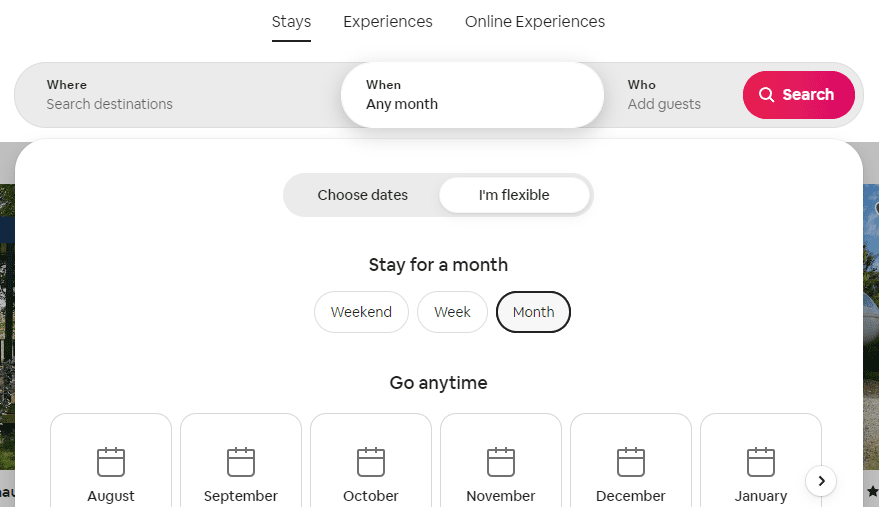
Longer bookings are not new to Airbnb. It has allowed stays of a month or more for years, but has leaned into them since remote work made furnished homes much more popular. Today, stays of 28 nights or more are a significant and growing part of the platform.
One thing to be clear about from the start: a Monthly Stay is still a furnished, flexible booking made through Airbnb. It is not the same as signing a traditional tenancy, and that difference matters. Which brings us to the terms.
Mid-term vs long-term: getting the terms straight
“Long-term Airbnb” gets used loosely, so it helps to separate three things:
- Short-term lets are stays under 28 nights, booked night by night. This is classic holiday and business travel.
- Mid-term rentals, also called mid-term lets, run from about a month up to six months, in a furnished home, with flexibility on both sides. This is what most Airbnb Monthly Stays really are, and it is the fastest-growing part of the market.
- Long-term lets usually mean six months or more, often unfurnished, under a formal tenancy agreement governed by housing law. In the UK, that is typically an assured shorthold tenancy, and it is normally arranged off-platform.
So when people talk about “doing long-term Airbnb,” they almost always mean furnished mid-term stays, not a traditional lease. For the fuller picture, our breakdown of long-term versus short-term lets walks through the trade-offs of each.
How pricing, payments and fees differ from short stays
The biggest shift from short-term hosting is in the numbers.
Discounts and nightly rate. Airbnb lets you set weekly and monthly discounts, and most monthly guests expect one. Your effective nightly rate will be lower than a peak-season short stay. The upside is that you fill long blocks of the calendar at once, with far fewer empty nights in between.
Monthly payments. For stays of 28 nights or more, Airbnb collects payment in monthly instalments rather than all at once. The guest pays the first month upfront, then pays each following month as the stay continues.
Cleaning fees. Airbnb’s cleaning fee is charged once per booking, not per night. Spread across a month or more, it barely affects the nightly cost. Many hosts lower or drop the cleaning fee for long stays, since there is only one turnover, and arrange mid-stay cleans separately if the guest wants them.
Fewer turnovers also mean lower running costs: less laundry, less restocking, fewer check-ins. Lower nightly rate, but usually lower cost and steadier cash flow.
The cancellation policy for stays of 28+ nights
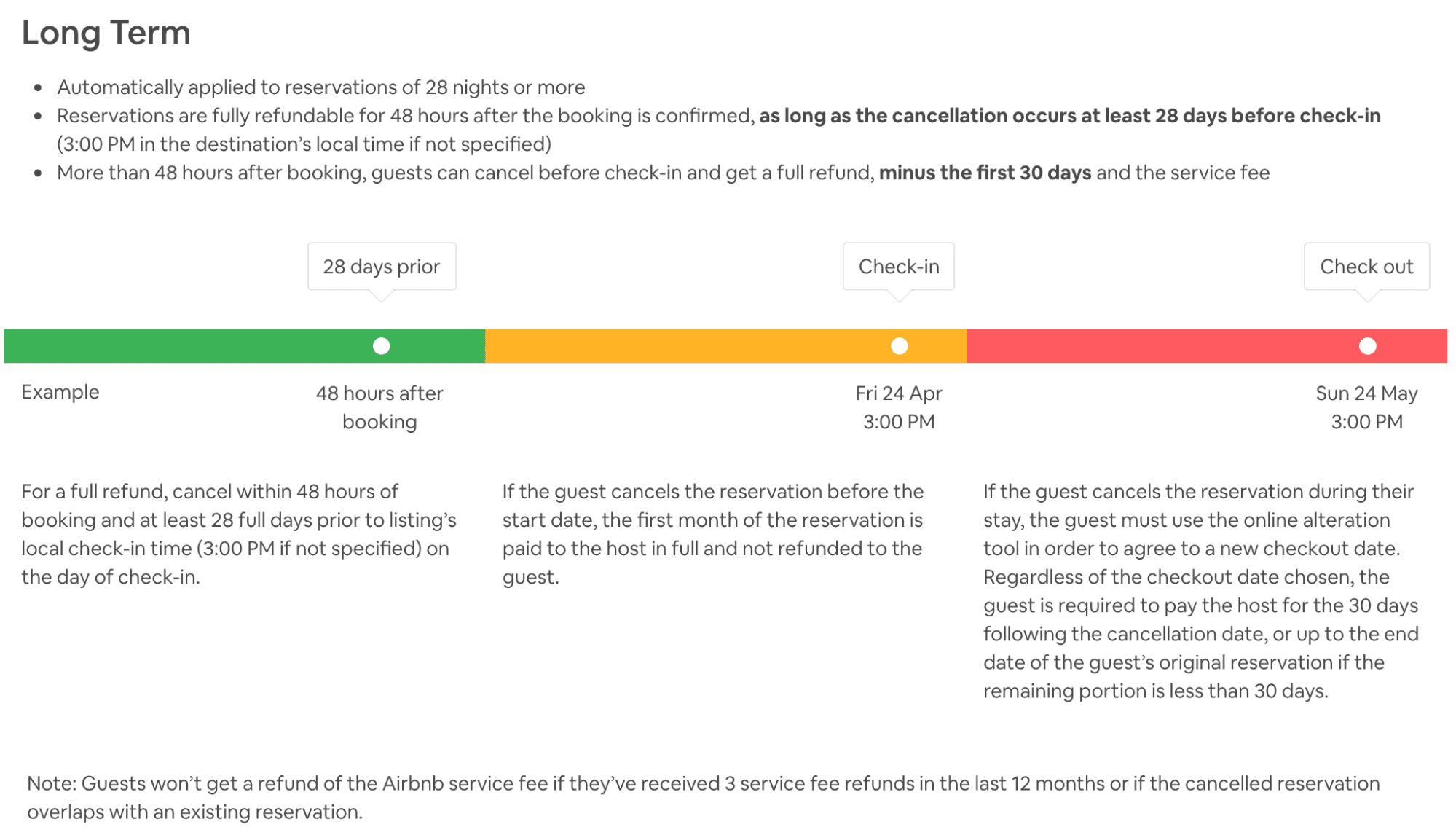
Long stays carry their own cancellation rules, separate from short bookings. For any reservation of 28 nights or more, Airbnb automatically applies a long-term cancellation policy, and you choose between a firmer or stricter version. As a rule, it expects around 30 days’ notice of changes, and if a guest leaves early after moving in, you are generally paid for the following 30 days.
It is worth knowing that the mandatory 24-hour free cancellation window Airbnb introduced for short stays in October 2025 does not apply to monthly stays in the same way. You can read the current terms on Airbnb’s long-term cancellation policy page. These rules can vary by country and by booking date, so check the version that applies to you.
Who books long-term Airbnb stays?
Longer stays attract a different guest from a weekend tourist. The most common are:
- Remote workers and digital nomads basing themselves somewhere for a season.
- Professionals on a work placement or relocating before they find a permanent home.
- Students staying for a term or a full academic year.
- People between homes, mid-renovation, or waiting on a house move.
- Corporate and insurance bookings, where a company arranges housing for staff. To host this kind of guest at scale, GuestReady’s corporate lets service is built for it.
These guests want a place to live rather than a tourist experience, and tend to stay longer and treat the property with care.
Setting up your place for longer stays
A short-stay listing needs a few tweaks before it works for monthly guests.
Make it livable, not just bookable. Month-long guests need what makes daily life easy: a proper workspace and reliable wifi, a working kitchen, laundry, and decent storage. A welcome guide on bins, local shops, and transport goes a long way.
Adjust the listing. Switch on weekly and monthly discounts, set a 28-night minimum if you only want long stays, and write your description for someone moving in rather than holidaying. If you are still finding your feet, our guide on setting up your Airbnb covers the basics.
Check the local rules. Longer stays change which regulations apply to you. In some cities, short lets are capped (entire-home short lets in Greater London, for example, are limited to 90 nights a year), which pushes some hosts toward monthly stays. Longer lets can bring their own obligations, though, so read up first. Our regulation guides are a good starting point, alongside your local authority.
Screen your guests. A month-plus booking is a bigger commitment than a weekend, so read reviews, ask about the reason for the stay, and set clear house rules before you accept.
Pros and cons: is it right for your property?
Monthly stays suit some properties far better than others.
They work well if you want fewer turnovers and less admin, steadier income, and good occupancy during quiet seasons. A student let from September to June, for instance, can fill nine months that would otherwise be patchy, then open up for the summer peak.
They work less well if your property sits in a hotspot where short-stay nightly rates are very high, since you would be discounting heavily, or if a sudden empty month would be hard to fill. A late cancellation hurts more when it leaves a month-shaped hole.
For many hosts, the answer is a mix: short stays in peak season, longer stays to cover the rest.
The easier way to manage long stays
Hosting longer stays is less work than back-to-back short bookings, but it is not no work. You still have pricing to get right, guests to screen and look after, and a property to keep in good shape over months of use.
That is where GuestReady comes in. Our mid-term rental management service handles everything from guest screening and monthly pricing to communication and upkeep, and our Airbnb management service covers your short stays, too. Want to know what your home could earn on longer stays? Get in touch, and we will talk it through.
Frequently asked questions
How long is a long-term Airbnb stay?
On Airbnb, anything from 28 nights counts as a monthly or long-term stay. In practice, most run from one to six months.
Does Airbnb have long-term rentals?
Yes. Airbnb’s Monthly Stays category is made for bookings of 28 nights or more, with monthly payments and its own cancellation policy.
Can I do long-term Airbnb in my flat?
Usually yes, but check your lease, mortgage, and local rules first. Some cities cap short lets or treat longer stays differently, and leaseholders may need permission.
How does Airbnb monthly pricing work?
You set a nightly rate plus weekly and monthly discounts. Guests pay the first month upfront, then monthly. The cleaning fee is charged once for the entire stay.
What is the minimum stay for long-term Airbnb?
28 nights. That is the threshold where Airbnb’s long-term pricing, payment, and cancellation rules apply.
