
Dubai city break: Your ultimate guide to the perfect getaway
Last updated: January 19, 2026
Planning a Dubai city break? Dubai packs extraordinary contrasts into a surprisingly manageable city. You’ll find record-breaking skyscrapers next to traditional souks, pristine beaches alongside vast desert dunes, and cutting-edge luxury shopping centers minutes from historic neighborhoods. It’s a city that works brilliantly for a long weekend.
Unlike destinations that sprawl endlessly, Dubai’s main attractions sit along a clear coastal strip connected by metro and taxi. You can watch the sunrise from the world’s tallest building, explore spice-scented souks by afternoon, and end your day watching the sunset over desert dunes, all without spending hours in transit.
This guide maps out a practical 3-day itinerary covering Dubai’s essential experiences, from iconic landmarks to authentic cultural encounters. You’ll find honest advice on getting around, where to stay, what to wear, and how to make the most of your time in this remarkable city.
If you’re still deciding where to stay, check out our guide to holiday apartments in Dubai for neighborhood recommendations. Ready to book? Browse available properties and book your stay with GuestReady.
Planning your trip to Dubai
How many days do you need?
Three days works well for Dubai. The city moves fast, attractions are big, and honestly, three days of full-on Dubai is about right before the heat and sheer scale starts feeling overwhelming.
You can cover the essentials (Burj Khalifa, a desert safari, traditional souks, and Dubai Marina) whilst actually enjoying each experience rather than just ticking boxes. Dubai isn’t huge geographically, but each attraction demands more time than you’d expect. The Dubai Mall alone could swallow an entire afternoon.
Two days works for transit stopovers, but you’ll be racing. Four or five days lets you add beach time, an Abu Dhabi day trip, and proper recovery from the desert safari. Beyond that, you’ll either love Dubai’s intensity or start craving somewhere quieter.
The itinerary below assumes three full days and includes both the record-breaking modern attractions and the traditional elements that remind you Dubai wasn’t always glass and steel.
Best times to visit Dubai
Dubai’s desert climate means timing matters more than in most cities. Get it wrong and you’ll spend your trip hiding indoors from brutal heat.
- Winter (November to March) is when Dubai works best. Temperatures sit between 20°C and 28°C, perfect for outdoor exploration. This is peak season, so expect crowds and higher prices, but at least you can walk around without melting.
- Spring (April to May) sees temperatures climbing toward the mid-30s. Manageable early on but gets progressively hotter. Fewer tourists mean better prices, though outdoor activities become less appealing.
- Summer (June to September) is brutal. Temperatures regularly hit 40°C and above, with crushing humidity. Most tourists avoid Dubai entirely during these months. Hotel prices drop significantly, but there’s a reason for that.
- Autumn (October to November) transitions back to tolerable weather. October still feels quite hot, but by November conditions improve considerably. Decent time for avoiding peak prices whilst having bearable weather.

Book accommodation and attractions well in advance for winter visits. Dubai stays busy November through March.
Getting around Dubai
Dubai stretches along the coast in a relatively straight line. Most attractions sit along or near Sheikh Zayed Road, the main highway running through the city.
The metro covers major areas efficiently with two lines connecting Dubai Mall, Burj Khalifa, Dubai Marina, and the traditional souks. Trains run frequently, stations are spotlessly clean and air-conditioned. Women and children have dedicated carriages if preferred.
Taxis are plentiful and reasonably priced. They’re metered and air-conditioned, though traffic gets heavy during rush hour (Sunday to Thursday, 7am to 9am and 5pm to 8pm). Dubai’s working week runs Sunday to Thursday, with Friday and Saturday as the weekend.
Walking works for exploring individual neighborhoods like Dubai Marina or the souks, but forget about walking between major areas. The heat is intense and distances are deceptive. Walk within areas, use transport between them.
Where to stay in Dubai
Dubai’s geography makes location choices simpler than in sprawling cities. The main areas run along the coast, each with distinct character and price points.
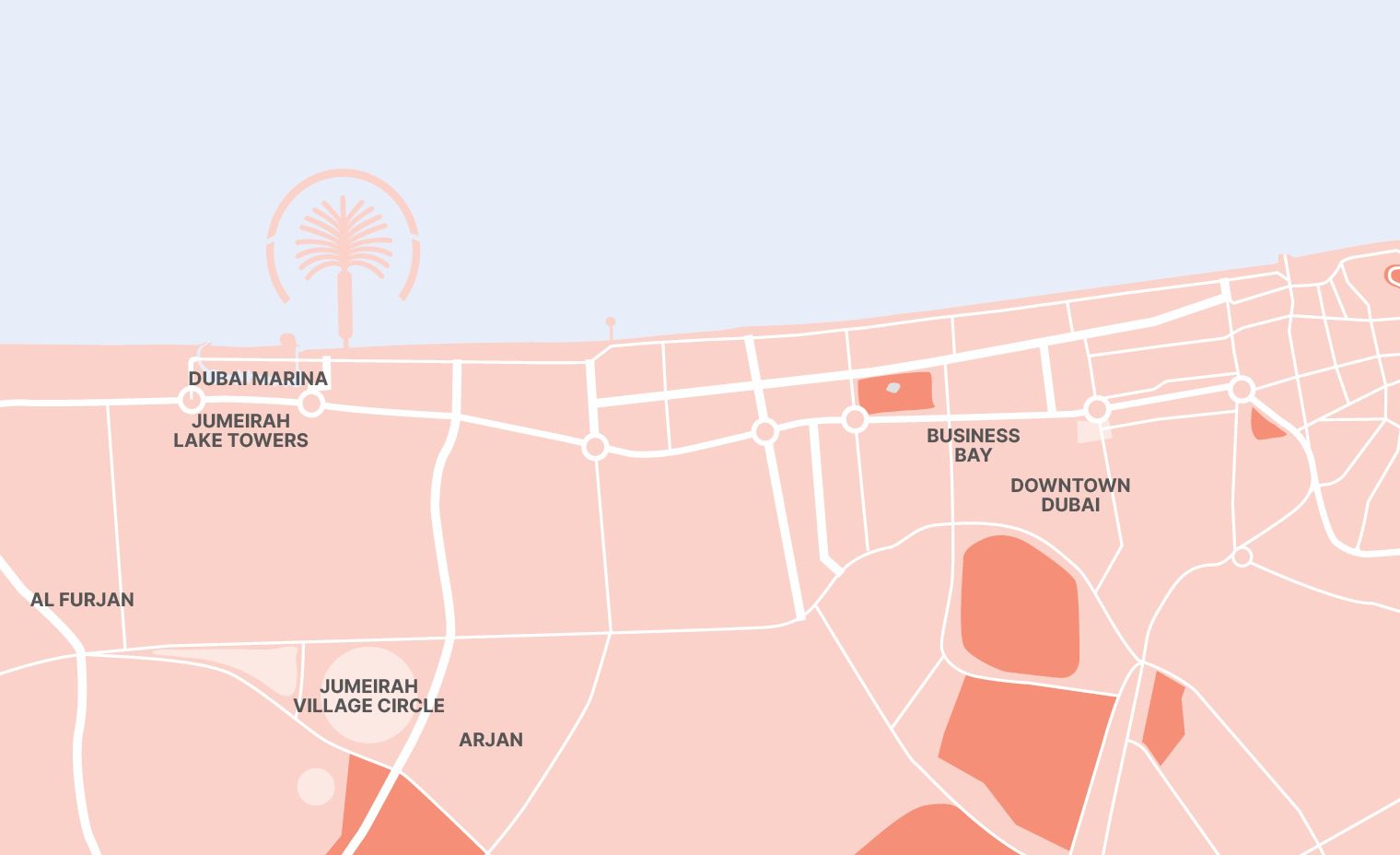
- Downtown Dubai puts you at the center of everything. The Burj Khalifa, Dubai Mall, and Dubai Fountain sit on your doorstep. It’s convenient for first-timers who want to maximize sightseeing time, though you’ll pay premium prices and share the area with thousands of other tourists.
- Dubai Marina offers waterfront living with a more relaxed vibe than Downtown. The area has excellent restaurants, a pleasant promenade for evening walks, and easy metro access. It’s modern, sleek, and popular with both tourists and expats.
- Jumeirah Beach Residence (JBR) suits beach-focused visitors. You’re right on the sand with plenty of restaurants and shops within walking distance. The atmosphere is lively, and you can actually walk places without needing transport, though you’re further from traditional Dubai attractions.
- Business Bay sits between Downtown and Dubai Marina, offering good value compared to both. It’s well-connected by metro and works well as a base for exploring the city without paying Downtown prices.
- Deira and Bur Dubai represent old Dubai, near the traditional souks and Dubai Creek. Accommodation costs less here, and you’re closer to the city’s historical side. The trade-off? You’re further from the modern attractions most visitors prioritize, and the areas feel less polished.
- Palm Jumeirah delivers resort-style luxury on the artificial palm-shaped island. It’s spectacular and indulgent, but isolated. You’ll need taxis for most trips, and the novelty of staying on the Palm comes with significantly higher prices.
Thinking longer term? Our guide to buying property in Dubai covers neighborhoods, investment considerations, and what to expect from the market. Or explore the short-term rental market in Dubai for insights on maximizing rental yields.
Why choose GuestReady for your Dubai stay
- GuestReady offers fully serviced apartments across Dubai’s best neighborhoods, giving you the space and comfort of a home with hotel-standard service. Many properties include private pools, gyms, and premium amenities that match Dubai’s luxury standards.
- You’ll have a kitchen for storing cold drinks, room to spread out after long days exploring, and the freedom to set your own schedule. Whether you’re visiting for a long weekend or an extended stay, every property is professionally managed with 24/7 support, and the team’s local expertise means recommendations for the best neighborhood gems.
Your 3-day Dubai itinerary
Day 1: Iconic landmarks and modern marvels
Morning: Burj Khalifa and Dubai Mall
Start early at the Burj Khalifa, the world’s tallest building at 828 meters. Book for around 9am to beat crowds and catch clearer views before afternoon haze sets in. The observation deck on the 124th floor shows you Dubai’s full scope, from desert stretching inland to the Persian Gulf beyond.
After descending, explore the Dubai Mall. With over 1,200 shops, it’s a destination in itself. The Dubai Aquarium sits in the middle, sharks and rays visible from multiple floors. You can walk through the tunnel or just admire it whilst passing between shops.
Midday: Dubai fountain
The Dubai Fountain sits outside the mall at the Burj Khalifa’s base. Shows run every 30 minutes from 1pm, with evening performances adding lights. It’s free to watch from the promenade. The choreographed water display lasts about three minutes. One viewing is probably enough, though you can book a boat ride on Burj Lake for a different perspective.
Afternoon: Downtown Dubai
The Dubai Opera building is worth seeing even if you’re not catching a performance. The architecture mimics a traditional dhow boat, and the surrounding area offers cafés with views back toward the Burj Khalifa.
Spend the rest of your afternoon exploring Downtown Dubai on foot. The area is designed for walking, with shaded pathways, outdoor art installations, and Souk Al Bahar, a modern take on traditional Arabian marketplaces with air-conditioned shops selling everything from carpets to jewelry.
Evening: Dubai Marina

For dinner, head to Dubai Marina, a vibrant waterfront district with numerous dining options. Enjoy a meal with a view at one of the marina’s many restaurants, such as Pier 7, which offers a variety of international cuisines. After dinner, take a leisurely walk along the marina promenade or enjoy a boat tour to see the impressive skyline illuminated at night.
After a full day of record-breaking architecture and air-conditioned malls, head back to your GuestReady accommodation to cool off by the pool and recharge for the next day’s adventures.
Day 2: Culture, beaches, and adventure
Morning: Al Fahidi historic district and Dubai museum
Start in Al Fahidi, one of Dubai’s oldest neighborhoods. The narrow lanes and traditional wind-tower houses show what Dubai looked like before the skyscrapers arrived. It’s quiet, low-rise, and feels completely removed from the glass towers you saw the day before.
The Dubai Museum sits inside Al Fahidi Fort, Dubai’s oldest building. It covers the city’s transformation from fishing village to global hub in a few compact galleries. Give yourself an hour here, then wander the surrounding streets where art galleries and cafés occupy restored heritage buildings.
Midday: Dubai Creek and traditional Souks
Walk to Dubai Creek and take an abra (traditional wooden boat) across the water. The short ride costs almost nothing and gives you a glimpse of Dubai’s trading past. On the far side sit the Gold and Spice Souks.
The Gold Souk displays more jewelry than you’d think possible in one place. Shop windows glitter with gold chains, bracelets, and ornate pieces, and shopkeepers will happily negotiate prices. The nearby Spice Souk assaults your senses with saffron, cardamom, dried lemons, and frankincense piled high in open shops. It’s touristy, yes, but genuinely atmospheric.
Learn the areas with the best rental yields in Dubai with GuestReady to maximize your investment returns and enhance your rental income.
Afternoon: Jumeirah beach and burj al arab
Head to Jumeirah Beach to recover from the morning’s sensory overload. The white sand and clear water provide a perfect contrast to souks and museums. From here you’ll see the Burj Al Arab, the sail-shaped hotel that’s become one of Dubai’s most recognizable landmarks.
The beach is public and free. Bring sun cream (the sun here doesn’t mess around) and stay hydrated. You can swim, hire water sports equipment, or simply sit and watch the endless parade of luxury yachts.

Evening: Desert safari and bedouin camp
Most desert safaris pick you up from your hotel mid-afternoon and return you by 9pm or 10pm. You’ll drive out to the red dunes for dune bashing in 4x4s (genuinely thrilling), try sandboarding, ride camels, and end at a Bedouin-style camp.
The camp includes a BBQ dinner, traditional entertainment like belly dancing and Tanoura shows, shisha smoking, and henna if you want it. The whole experience feels somewhat staged for tourists, but watching the sunset over empty desert while sitting on cushions with Arabic coffee makes up for the tourist-friendly packaging.
The desert safari tires you out. You’ll appreciate your comfortable GuestReady bed after all that sand and excitement.
Day 3: Shopping, gardens, and nightlife
Morning: Mall of the Emirates and Ski Dubai
Start at the Mall of the Emirates, another massive shopping destination. Inside sits Ski Dubai, an indoor ski resort complete with real snow, penguins, and ski slopes. Yes, skiing in the desert. It’s absurd and brilliant in equal measure.
You can ski, snowboard, or just walk around in the snow wearing the provided winter gear. The penguins waddle about looking confused by their air-conditioned existence. It’s pure Dubai, taking something impossible and making it happen through sheer determination and massive amounts of energy.
Midday: Dubai miracle garden
The Dubai Miracle Garden showcases over 150 million flowers arranged into elaborate displays. You’ll find floral castles, life-sized aircraft covered in blooms, and peacock sculptures made entirely from petals. It’s colorful, impressive, and slightly overwhelming.
The garden only opens during cooler months (roughly November to May), so check before planning your visit. Give yourself two hours to wander through without rushing. Bring water and prepare for crowds, especially on weekends.
Afternoon: Palm Jumeirah and Atlantis
Head to Palm Jumeirah, the artificial palm-shaped island visible from space. Take the monorail from the mainland to see how the individual fronds stretch out into the Persian Gulf. At the tip sits Atlantis The Palm, a vast resort complex.
You don’t need to stay at Atlantis to visit. The Lost Chambers Aquarium and Aquaventure Waterpark are open to day visitors, though both require separate tickets and fill up quickly.

Evening: Your final Dubai experience
For your final evening in Dubai, treat yourself to a memorable dining experience at one of the city’s top restaurants. Consider dining at Pierchic, an overwater restaurant offering stunning views of the Arabian Gulf, or Atmosphere, located on the 122nd floor of the Burj Khalifa.
After dinner, explore Dubai’s vibrant nightlife. Whether you prefer a rooftop bar like Level 43 Sky Lounge, a beach club, or a lively nightclub, Dubai offers plenty of options to end your trip on a high note.
Food you can’t miss in Dubai
Use this as your Dubai food checklist, ticking off each experience as you go.
Must-try classics:
- Shawarma from a street stall (marinated meat in flatbread)
- Fresh hummus with warm Arabic bread
- Falafel (crispy chickpea fritters)
- Manakish (flatbread with za’atar, cheese, or minced meat)
- Grilled halloumi cheese
- Lamb machboos (spiced rice dish)
- Fresh dates with Arabic coffee
- Kunafa (sweet cheese pastry soaked in syrup)
- Luqaimat (sweet dumplings drizzled with date syrup)
- Mixed grill platters at traditional restaurants
- Fresh seafood (particularly hammour, a local favorite)
Unique Dubai experiences:
- Friday brunch (Dubai’s legendary all-you-can-eat affairs)
- Rooftop dining with skyline views
Dubai’s food scene reflects its multicultural population. You’ll find excellent Indian, Lebanese, and Iranian restaurants alongside traditional Emirati cuisine. Traditional souks have small restaurants serving authentic local food for reasonable prices. Downtown and Dubai Marina offer spectacular views and upscale dining.
Travel essentials for Dubai
What to Pack
- Lightweight, modest clothing
- Comfortable walking shoes for malls and attractions
- Sandals for the beach
- Sun cream
- Sunglasses and a hat
- Light jacket or pashmina for over-air-conditioned spaces
- Swimwear for hotel pools and beaches
- Reusable water bottle (staying hydrated is crucial)
Before you go:
- Check visa requirements (UK, US, and many nationalities get visa on arrival)
- Book Burj Khalifa and desert safari tickets in advance
- Download ride-sharing apps (Uber, Careem)
- Notify your bank you’re travelling
- Check if your hotel has alcohol license (not all do)
Money basics: Dubai uses the UAE Dirham (AED). Cards work everywhere, and contactless payment is standard. ATMs are plentiful. Tipping isn’t obligatory but appreciated, around 10-15% in restaurants if service charge isn’t included.
Dress code: Dubai is more relaxed than other Middle Eastern cities, but modest dress is expected in public areas, malls, and religious sites. Cover shoulders and knees. Swimwear is fine at beaches and hotel pools, but cover up when leaving.
Stay safe: Dubai is very safe with low crime rates. Keep valuables secure in crowded areas like souks and malls. Be cautious crossing roads as traffic moves fast. The heat can be dangerous, so drink water constantly and seek shade during midday hours.
Frequently asked questions
What’s the best time of year to visit Dubai?
- November to March offers the best weather with temperatures between 20°C and 28°C, perfect for outdoor activities. This is peak season, so expect crowds and higher prices. Avoid June to September when temperatures regularly exceed 40°C with high humidity. October and early November see temperatures dropping back to tolerable levels with fewer tourists and better prices than peak winter months.
Do I need a visa for Dubai?
- UK, US, and many other nationalities receive a free visa on arrival valid for 30 or 90 days depending on your passport. Check the UAE government website for your specific country’s requirements before travelling.
Is Dubai expensive for a holiday?
- Dubai can be pricey, particularly for accommodation in prime areas and dining at upscale restaurants. Desert safaris, attraction tickets, and activities add up quickly. However, street food is affordable, taxis are reasonably priced, and the metro is cheap. Budget around £150-200 per person daily for comfortable travel including accommodation, food, transport, and attractions.
What should I wear in Dubai?
- Cover shoulders and knees in public areas, malls, and when visiting mosques. Lightweight, loose-fitting clothes work best in the heat. Swimwear is fine at beaches and hotel pools, but cover up when walking to and from these areas. Dubai is more relaxed than other Middle Eastern cities, but modest dress shows respect for local culture and keeps you comfortable in the sun.
What can I expect when booking a GuestReady property?
- Every stay includes hotel-quality linen and toiletries, 24/7 guest support, contactless check-in, and professionally cleaned homes, ensuring a smooth and comfortable experience.
Explore more city break guides
Looking for more city break inspiration? Check out our other guides:
- Porto city break – Portugal’s charming riverside city with port wine, azulejo tiles, and stunning coastal views.
- Paris city break – Iconic landmarks, world-class museums, charming neighborhoods, and exceptional French cuisine.
